

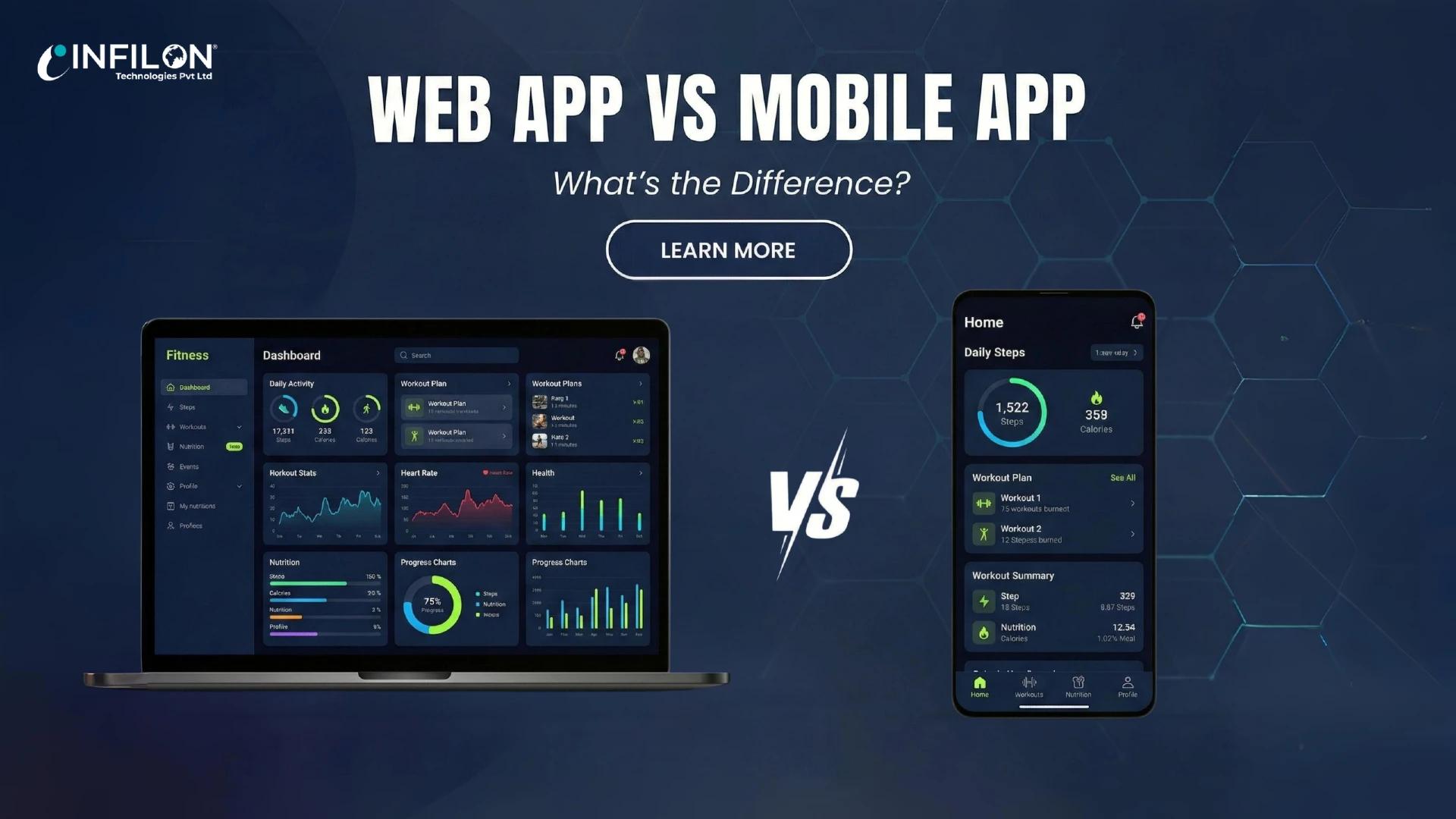
In today’s digital-first world, businesses often face a crucial decision when building software solutions: should you develop a web app or a mobile app? While both serve similar purposes—delivering functionality to users—their development approach, performance, cost, and user experience differ significantly.
Understanding the difference between web apps and mobile apps is essential for choosing the right technology that aligns with your business goals, target audience, and long-term growth strategy. In this blog, we’ll break down the key differences and help you decide which option is best for your business.
What Is a Web App?
A web application is a software application that runs in a web browser. Users can access it through the internet without installing anything on their device. Popular examples include email platforms, online banking portals, and project management tools.
Web apps are built using standard web technologies such as HTML, CSS, and JavaScript, and they work across multiple devices and operating systems.
Key Characteristics of Web Apps
- Accessible via web browsers
- No installation required
- Platform-independent
- Easy to update and maintain
- SEO-friendly for discoverability
Many businesses choose to work with a web development company to create scalable web applications that reach users across desktops, tablets, and mobile devices with a single codebase.
What Is a Mobile App?
A mobile application is a software application specifically designed to run on mobile devices such as smartphones and tablets. These apps are downloaded and installed from app stores like Google Play or the Apple App Store.
Mobile apps are developed using platform-specific languages and frameworks such as Swift (iOS) and Kotlin (Android), or cross-platform tools like Flutter and React Native.
Key Characteristics of Mobile Apps
- Installed directly on devices
- Optimized for mobile performance
- Access to device features (camera, GPS, sensors)
- Better offline capabilities
- Higher engagement through push notifications
Businesses seeking immersive user experiences often partner with a mobile app development company to build high-performance applications tailored to specific platforms.
Web App vs Mobile App: Key Differences
1. Platform Compatibility
Web apps work across all platforms with a browser, making them highly accessible. Mobile apps are platform-specific and require separate development for iOS and Android unless cross-platform frameworks are used.
2. Performance
Mobile apps generally offer better performance because they are built specifically for a device’s operating system. Web apps rely on browsers, which may limit speed and responsiveness.
3. User Experience
Mobile apps provide a smoother and more interactive experience, especially for tasks requiring frequent use. Web apps focus on simplicity and accessibility, making them ideal for broader audiences.
4. Development Cost and Time
Web apps are usually faster and more cost-effective to develop because a single application works across all platforms. Mobile apps require more time and resources due to platform-specific development.
5. Updates and Maintenance
Web apps update instantly for all users. Mobile apps require users to download updates from app stores, which can delay feature rollouts.
When to Choose a Web App
Web apps are ideal when:
- You want to reach a wide audience quickly
- SEO and online visibility are important
- You need faster development and lower costs
- Your app is content-driven or transactional
A reliable web development company can help you build responsive, secure, and scalable web applications that perform seamlessly across devices.
When to Choose a Mobile App
Mobile apps are the right choice when:
- Your users will interact with the app frequently
- You need access to device hardware features
- Offline functionality is critical
- Push notifications are essential for engagement
An experienced mobile app development company ensures that your app delivers high performance, intuitive UI, and platform-specific optimization.
Progressive Web Apps: A Hybrid Approach
Progressive Web Apps (PWAs) combine the best of both worlds. They are web apps that behave like mobile apps, offering offline access, push notifications, and app-like performance.
PWAs are gaining popularity as businesses look for cost-effective alternatives without compromising user experience. However, they may still have limitations compared to fully native mobile apps.
Security Considerations
Security is critical for both web and mobile apps:
- Web apps rely heavily on browser security and HTTPS encryption
- Mobile apps benefit from OS-level security features
Partnering with a trusted software development company in USA ensures your application meets security standards, compliance requirements, and data protection regulations.
Web App vs Mobile App: Which Is Right for Your Business?
Choosing between a web app and a mobile app depends on several factors:
- Target audience behavior
- Budget and timeline
- Required features and integrations
- Long-term scalability goals
Businesses offering app development services often help clients analyze these factors before recommending the best solution. In many cases, a phased approach—starting with a web app and later expanding to a mobile app—can deliver maximum ROI.
Final Thoughts
Both web apps and mobile apps have their own strengths and use cases. Web apps offer accessibility, speed, and cost efficiency, while mobile apps deliver superior performance and user engagement.
The right choice isn’t about which option is better—it’s about which one aligns with your business objectives. Whether you’re launching a startup product or scaling an enterprise solution, working with the right development partner ensures success at every stage.
