
lfArrowSvg
Blogs
blog-img
Headless CMS: The Future of E-commerce Web Development
Category
Recent News
blog-image
2026-04-20 07:30dot separator7 min read
cross arrow

Fintech App Development: Trends and Security Tips for 2026

The financial technology (Fintech) industry continues to evolve rapidly, driven by digital innovation, changing customer expectations, and the need for secure and efficient financial services. In 2026, businesses are increasingly investing in Fintech App Development to offer seamless banking, payment, lending, and investment experiences.From mobile banking apps to AI-powered financial platforms, fintech solutions are transforming how people manage money. However, with this growth comes the critical need for robust security measures. In this blog, we explore the latest fintech trends and essential security tips shaping the future of digital finance.Understanding Fintech App DevelopmentFintech App Development involves creating software applications that provide financial services such as payments, lending, wealth management, insurance, and blockchain-based solutions. These apps are designed to enhance accessibility, improve efficiency, and deliver personalized user experiences.A reliable Fintech App Development company helps businesses design and deploy scalable, secure, and innovative fintech solutions tailored to modern user demands.Top Fintech App Development Trends in 20261. AI-Powered Financial SolutionsArtificial Intelligence is transforming fintech by enabling predictive analytics, fraud detection, and personalized financial recommendations. AI-driven chatbots and virtual assistants improve customer support and user engagement.Companies like Infilon Technologies are leveraging AI to build intelligent fintech solutions that deliver real-time insights and automation.2. Blockchain and Decentralized Finance (DeFi)Blockchain technology continues to disrupt traditional financial systems by providing transparency, security, and decentralization. DeFi platforms allow users to access financial services without intermediaries, reducing costs and increasing efficiency.3. Embedded FinanceEmbedded finance integrates financial services directly into non-financial platforms such as e-commerce apps, ride-sharing services, and social media platforms. This trend enhances user convenience and expands revenue opportunities for businesses.4. Open Banking APIsOpen banking allows third-party developers to access financial data through APIs, enabling the creation of innovative financial services. This promotes collaboration between banks and fintech companies.5. Contactless Payments and Digital WalletsThe demand for contactless payments and digital wallets is growing rapidly. Mobile payment apps offer faster, safer, and more convenient transaction experiences.6. RegTech (Regulatory Technology)RegTech solutions help financial institutions comply with regulatory requirements efficiently. These tools automate compliance processes and reduce operational risks.Importance of Security in Fintech ApplicationsSecurity is a top priority in fintech applications due to the sensitive nature of financial data. A single breach can lead to significant financial loss and reputational damage.Partnering with a trusted custom software development company in India ensures that security is embedded into every stage of the development process.Essential Security Tips for Fintech App Development1. Data EncryptionEncrypting data both at rest and in transit ensures that sensitive information remains protected from unauthorized access.2. Multi-Factor Authentication (MFA)MFA adds an extra layer of security by requiring users to verify their identity using multiple authentication methods.3. Secure APIsAPIs are a critical component of fintech applications. Ensuring API security through authentication and monitoring helps prevent unauthorized access.4. Regular Security AuditsConducting regular vulnerability assessments and penetration testing helps identify and address potential security threats.5. Compliance with RegulationsFintech apps must comply with regulations such as GDPR, PCI DSS, and local financial laws to ensure data protection and legal compliance.6. Fraud Detection SystemsAI-based fraud detection systems monitor transactions in real time and identify suspicious activities, reducing the risk of fraud.Benefits of Investing in Fintech App DevelopmentImproved Customer ExperienceFintech apps provide seamless, user-friendly interfaces that enhance customer satisfaction.Faster TransactionsDigital platforms enable instant payments and quick financial processing.Cost EfficiencyAutomation reduces operational costs and improves efficiency.ScalabilityFintech solutions can easily scale to accommodate growing user bases and evolving business needs.Why Choose Infilon Technologies for Fintech SolutionsInfilon Technologies is a leading provider of innovative software solutions, offering expertise in fintech application development. With a strong focus on security, scalability, and performance, the company delivers tailored fintech solutions that meet modern business requirements.As a trusted custom software development company in India, Infilon combines technical expertise with industry knowledge to build reliable and future-ready fintech applications.Global Fintech Development LandscapeThe fintech industry is expanding globally, with businesses increasingly partnering with a reliable software development company USA to ensure high-quality, secure, and scalable solutions.Global trends indicate a growing demand for AI-driven financial platforms, blockchain-based applications, and secure digital payment systems.Challenges in Fintech App DevelopmentDespite its advantages, fintech development comes with challenges such as:Regulatory compliance complexitiesData security concernsIntegration with legacy systemsHigh competition in the fintech marketWorking with an experienced Fintech App Development company helps businesses overcome these challenges and deliver successful solutions.The Future of Fintech App DevelopmentThe future of fintech lies in innovation, security, and user-centric design. Emerging technologies like AI, blockchain, and cloud computing will continue to shape the industry.As digital transformation accelerates, businesses investing in Fintech App Development will gain a competitive advantage by offering smarter, faster, and more secure financial services.ConclusionFintech app development is revolutionizing the financial industry, offering new opportunities for businesses to innovate and grow. However, success in fintech requires a strong focus on both technology and security.By staying updated with the latest trends and implementing robust security measures, businesses can build reliable fintech solutions that meet user expectations and regulatory standards.Partnering with experts like Infilon Technologies ensures the development of secure, scalable, and future-ready fintech applications tailored to your business goals.

blog-image
2026-03-20 17:30dot separator7 min read
cross arrow

AI/ML Integration in Custom Software Development: A 2026 Guide

Artificial Intelligence (AI) and Machine Learning (ML) are no longer emerging technologies—they are essential drivers of digital transformation. In 2026, businesses are rapidly integrating AI/ML capabilities into their applications to automate processes, enhance decision-making, and deliver personalized user experiences.The fusion of AI with custom software solutions is redefining how organizations operate. From predictive analytics to intelligent automation, AI in Custom Software is enabling smarter, faster, and more scalable systems across industries.In this guide, we explore how AI/ML integration is transforming custom software development and why businesses should embrace this shift.What is AI/ML Integration in Custom Software Development?AI/ML integration refers to embedding intelligent algorithms and data-driven models into software applications to enable systems to learn, predict, and adapt. Unlike traditional software that follows predefined rules, AI-powered systems continuously improve based on data inputs.A reliable custom software development company in India helps businesses design and implement AI-driven applications tailored to their operational needs and industry requirements.Why AI/ML is Essential in 20261. Data-Driven Decision MakingBusinesses generate massive volumes of data daily. AI and ML models process this data to deliver actionable insights, helping organizations make informed decisions in real time.2. Automation and EfficiencyAI automates repetitive tasks, reducing manual effort and improving operational efficiency. This leads to cost savings and faster workflows.3. Personalization at ScaleFrom recommendation engines to targeted marketing, AI enables businesses to deliver highly personalized experiences to users.4. Competitive AdvantageCompanies leveraging AI in Custom Software gain a significant edge by offering smarter, more responsive products.Key Applications of AI/ML in Custom Software1. Predictive AnalyticsAI models analyze historical data to forecast trends, customer behavior, and business outcomes. This is widely used in finance, healthcare, and retail industries.2. Intelligent ChatbotsAI-powered chatbots enhance customer support by providing instant, accurate responses and improving user engagement.3. Image and Speech RecognitionAI enables applications to process images, videos, and voice data, enabling use cases such as facial recognition and voice assistants.4. Process AutomationAI-driven automation streamlines workflows, reduces errors, and increases productivity across business operations.Benefits of AI Integration in Custom Software DevelopmentImproved EfficiencyAI systems automate processes and optimize workflows, leading to higher efficiency.Enhanced User ExperienceAI enables intuitive interfaces and personalized interactions, improving user satisfaction.ScalabilityAI-powered applications adapt to increasing data and user demands, ensuring long-term scalability.Cost OptimizationAutomation reduces operational costs while improving output quality.Businesses partnering with an experienced AI Development company in Ahmedabad can unlock these benefits effectively and implement scalable AI solutions.Steps to Integrate AI/ML into Custom SoftwareStep 1: Define Business ObjectivesIdentify the specific problems AI can solve—whether it's improving customer experience, automating processes, or enhancing analytics.Step 2: Data Collection and PreparationAI models require high-quality data. Proper data collection, cleaning, and structuring are essential for accurate outcomes.Step 3: Choose the Right AI ModelsSelect appropriate machine learning models based on the use case, such as supervised learning, unsupervised learning, or deep learning.Step 4: Development and IntegrationIntegrate AI models into existing or new software systems. This requires expertise in both software engineering and AI technologies.Step 5: Continuous Monitoring and OptimizationAI systems evolve over time, requiring ongoing monitoring, training, and optimization to maintain accuracy and performance.Challenges in AI/ML IntegrationWhile AI offers numerous advantages, businesses must address challenges such as:Data privacy and security concernsHigh initial investmentComplexity of implementationNeed for skilled professionalsWorking with a trusted AI Development company helps overcome these challenges and ensures successful implementation.Role of AI Development ServicesProfessional AI development services play a crucial role in delivering high-quality AI-powered solutions. These services include:AI strategy consultingModel development and deploymentIntegration with existing systemsPerformance optimization and maintenanceOrganizations partnering with experts like Infilon Technologies can accelerate AI adoption and achieve faster results.Why Choose Infilon Technologies for AI-Powered SolutionsInfilon Technologies is a leading provider of innovative software solutions, specializing in AI-driven custom development. With expertise in modern frameworks and intelligent systems, the company delivers scalable and future-ready applications tailored to business needs.As a trusted custom software development company in India, Infilon Technologies focuses on building secure, efficient, and high-performance solutions that align with industry standards.Global Trends in AI-Powered Software DevelopmentAI adoption is growing rapidly worldwide, especially among enterprises collaborating with a reliable software development company USA to build enterprise-grade solutions.Key trends include:AI-powered automation across industriesIntegration of generative AI in applicationsIncreased focus on ethical AI practicesExpansion of AI in cloud-based platformsThese trends highlight the importance of integrating AI into modern software systems.Future of AI in Custom Software DevelopmentThe future of custom software lies in intelligent, adaptive systems. As AI continues to evolve, we can expect:Autonomous decision-making systemsReal-time predictive analyticsAdvanced personalization capabilitiesSeamless human-AI collaborationBusinesses investing in AI-driven development today will be better positioned for tomorrow’s digital landscape.ConclusionAI and ML are transforming the way software is designed, developed, and deployed. Integrating AI into custom applications enables businesses to automate processes, enhance decision-making, and deliver superior user experiences.The adoption of AI in Custom Software is no longer optional—it’s a necessity for staying competitive in 2026 and beyond.

The digital commerce landscape is evolving rapidly. Customers expect seamless shopping experiences across websites, mobile apps, social platforms, and even IoT devices. Traditional content management systems (CMS) often struggle to meet these growing demands due to rigid architectures and limited flexibility.

This is where Headless CMS emerges as a game-changer. By decoupling the frontend from the backend, headless architecture is transforming E-commerce Web Development and setting new standards for scalability, performance, and omnichannel delivery.

In this article, we’ll explore why Headless CMS is considered the future of modern e-commerce platforms and how businesses can leverage it for sustainable growth.

What is a Headless CMS?

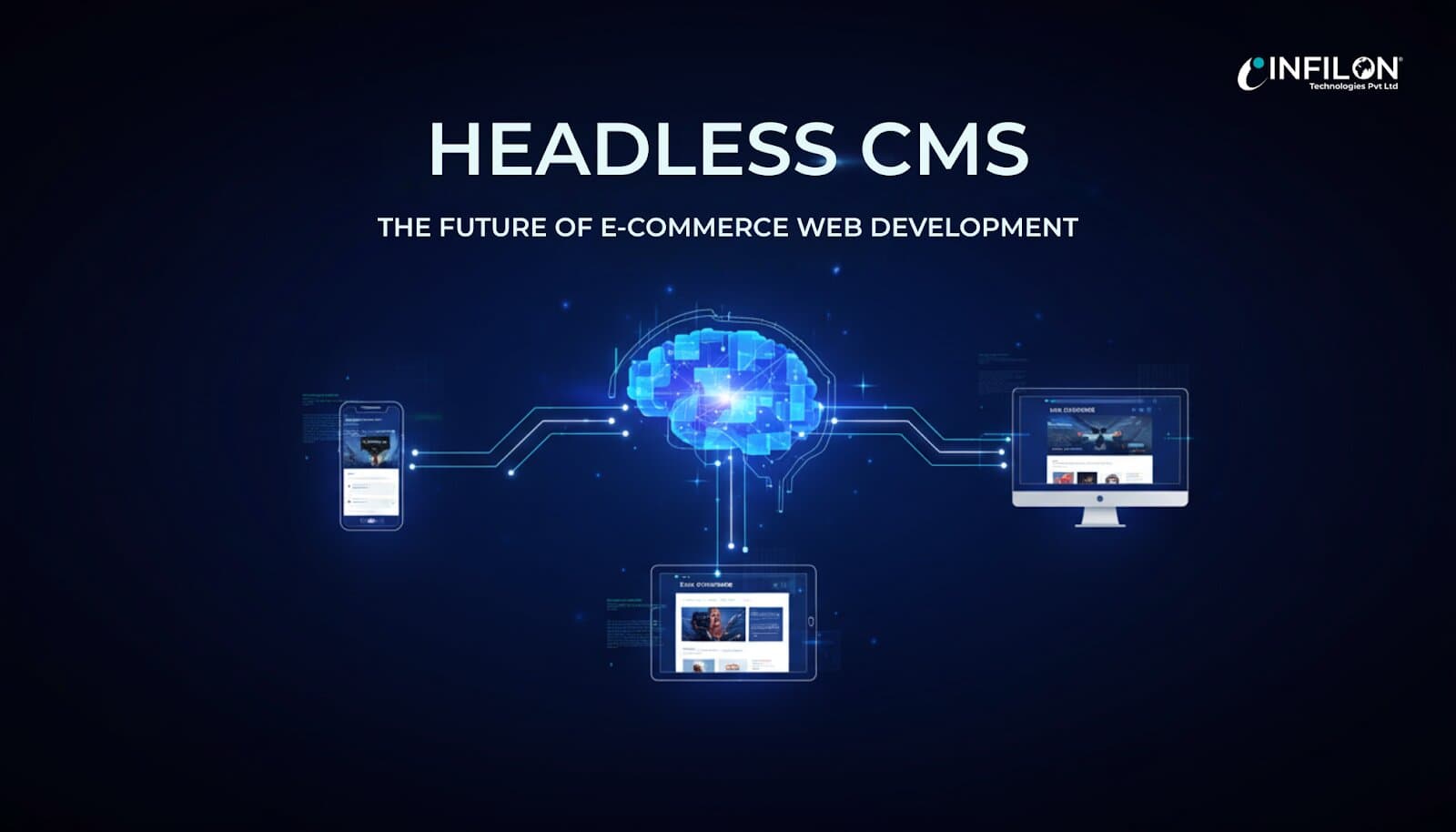
A Headless CMS is a content management system where the backend (content repository) is separated from the frontend (presentation layer). Instead of delivering content through predefined templates, it uses APIs to distribute content across multiple platforms.

Unlike traditional CMS platforms where the content and presentation are tightly integrated, a headless architecture allows developers to build custom frontends using frameworks like React, Angular, or Vue while pulling content dynamically from the backend.

This decoupled approach offers unparalleled flexibility in E-commerce Web Development, especially for brands targeting multiple digital channels.

Why Traditional CMS is Falling Behind

Traditional CMS platforms were designed primarily for website management. However, modern e-commerce requires:

  • Omnichannel content delivery
  • High-speed performance
  • Personalized shopping experiences
  • Seamless integrations with third-party tools
  • Scalability during peak traffic

Monolithic CMS architectures limit customization and scalability, making them less suitable for modern digital commerce strategies.

How Headless CMS Powers Modern E-commerce Web Development

1. Omnichannel Content Delivery

Today’s consumers interact with brands across websites, mobile apps, marketplaces, voice assistants, and social media platforms. A Headless CMS enables businesses to manage content centrally and distribute it via APIs to multiple channels.

This ensures consistent branding and messaging while reducing content management complexity.

2. Enhanced Performance and Speed

Page load speed directly impacts conversion rates in e-commerce. Headless architecture allows developers to use lightweight frontend frameworks, improving performance and delivering faster user experiences.

For businesses investing in scalable Ecommerce Web Development, performance optimization becomes significantly easier with a decoupled architecture.

3. Greater Flexibility and Customization

With traditional CMS platforms, developers are restricted by predefined themes and templates. Headless architecture provides complete freedom to design customized frontends tailored to brand identity and customer needs.

This flexibility allows businesses to innovate quickly and experiment with new features without disrupting backend operations.

4. Improved Scalability

As businesses grow, their digital infrastructure must scale efficiently. Headless CMS systems support microservices architecture, enabling seamless scalability during high-traffic events like holiday sales or product launches.

Enterprises often collaborate with a trusted software development company in USA to implement scalable headless commerce solutions aligned with global standards.

5. Better Integration with Modern Technologies

Headless CMS integrates smoothly with:

  • Payment gateways
  • CRM systems
  • ERP software
  • Marketing automation tools
  • AI-driven recommendation engines

This integration capability strengthens overall E-commerce Web Development strategies and ensures a unified digital ecosystem.

Headless Commerce vs Traditional Commerce

Feature Traditional CMS Headless CMS
Architecture Monolithic Decoupled
Flexibility Limited Highly customizable
Omnichannel Support Restricted API-driven
Scalability Moderate High
Performance Template-dependent Optimized frontend

The comparison clearly highlights why businesses are shifting toward headless commerce models.

Key Benefits of Headless CMS for E-commerce Businesses

1. Faster Time-to-Market

Developers can work independently on frontend and backend components, accelerating deployment cycles.

2. Personalized User Experiences

Headless architecture makes it easier to integrate AI and personalization tools, enhancing customer engagement.

3. Future-Proof Technology

As new platforms emerge, businesses can integrate them without restructuring the entire system.

4. Improved Developer Productivity

Development teams can use modern frameworks and technologies, increasing efficiency and innovation.

Industry Use Cases of Headless CMS

Retail & Fashion

Brands can deliver personalized product catalogs across mobile apps and web platforms.

B2B E-commerce

Complex pricing structures and product configurations become easier to manage.

Subscription-Based Services

Flexible content delivery enables dynamic subscription management and promotions.

Companies offering professional Ecommerce development services increasingly recommend headless architecture to clients seeking long-term scalability.

Challenges to Consider

While Headless CMS offers numerous advantages, businesses should consider:

  • Higher initial development complexity
  • Need for experienced development teams
  • API management and security considerations

Partnering with experts ensures smooth implementation and ongoing optimization.

The Role of E-commerce Development Services

Implementing headless architecture requires strategic planning and technical expertise. Professional Ecommerce development services help businesses:

  • Choose the right headless CMS platform
  • Design scalable system architecture
  • Integrate APIs and third-party tools
  • Optimize frontend performance
  • Maintain security and compliance

Working with experienced development partners ensures the successful deployment of headless commerce solutions.

The Future of E-commerce Web Development

As customer expectations continue to rise, businesses must embrace technologies that support agility, speed, and innovation. Headless architecture enables brands to deliver seamless experiences across every digital touchpoint.

In the coming years, we can expect:

  • Greater AI integration
  • Voice-commerce capabilities
  • Real-time personalization
  • Progressive Web Apps powered by headless CMS
  • Increased adoption of composable commerce

These advancements will further redefine the standards of modern E-commerce Web Development.

Conclusion

Headless CMS is not just a technological trend—it represents the future of scalable, high-performance digital commerce. By decoupling content from presentation, businesses gain the flexibility to innovate, personalize, and expand across multiple platforms.

For companies seeking competitive advantage in today’s digital marketplace, adopting a Headless CMS strategy ensures faster performance, omnichannel readiness, and long-term scalability.

With the right development expertise and strategic planning, headless architecture can transform your e-commerce ecosystem into a powerful, future-ready platform.


whatsAppImg