

lfArrowSvg
Blogs
blog-img
Headless CMS: The Future of E-commerce Web Development
Category
Recent News
blog-image
2026-02-24 17:30dot separator7 min read
cross arrow

Headless CMS: The Future of E-commerce Web Development

The digital commerce landscape is evolving rapidly. Customers expect seamless shopping experiences across websites, mobile apps, social platforms, and even IoT devices. Traditional content management systems (CMS) often struggle to meet these growing demands due to rigid architectures and limited flexibility. This is where Headless CMS emerges as a game-changer. By decoupling the frontend from the backend, headless architecture is transforming E-commerce Web Development and setting new standards for scalability, performance, and omnichannel delivery. In this article, we’ll explore why Headless CMS is considered the future of modern e-commerce platforms and how businesses can leverage it for sustainable growth. What is a Headless CMS? A Headless CMS is a content management system where the backend (content repository) is separated from the frontend (presentation layer). Instead of delivering content through predefined templates, it uses APIs to distribute content across multiple platforms. Unlike traditional CMS platforms where the content and presentation are tightly integrated, a headless architecture allows developers to build custom frontends using frameworks like React, Angular, or Vue while pulling content dynamically from the backend. This decoupled approach offers unparalleled flexibility in E-commerce Web Development, especially for brands targeting multiple digital channels. Why Traditional CMS is Falling Behind Traditional CMS platforms were designed primarily for website management. However, modern e-commerce requires: Omnichannel content delivery High-speed performance Personalized shopping experiences Seamless integrations with third-party tools Scalability during peak traffic Monolithic CMS architectures limit customization and scalability, making them less suitable for modern digital commerce strategies. How Headless CMS Powers Modern E-commerce Web Development 1. Omnichannel Content Delivery Today’s consumers interact with brands across websites, mobile apps, marketplaces, voice assistants, and social media platforms. A Headless CMS enables businesses to manage content centrally and distribute it via APIs to multiple channels. This ensures consistent branding and messaging while reducing content management complexity. 2. Enhanced Performance and Speed Page load speed directly impacts conversion rates in e-commerce. Headless architecture allows developers to use lightweight frontend frameworks, improving performance and delivering faster user experiences. For businesses investing in scalable Ecommerce Web Development, performance optimization becomes significantly easier with a decoupled architecture. 3. Greater Flexibility and Customization With traditional CMS platforms, developers are restricted by predefined themes and templates. Headless architecture provides complete freedom to design customized frontends tailored to brand identity and customer needs. This flexibility allows businesses to innovate quickly and experiment with new features without disrupting backend operations. 4. Improved Scalability As businesses grow, their digital infrastructure must scale efficiently. Headless CMS systems support microservices architecture, enabling seamless scalability during high-traffic events like holiday sales or product launches. Enterprises often collaborate with a trusted software development company in USA to implement scalable headless commerce solutions aligned with global standards. 5. Better Integration with Modern Technologies Headless CMS integrates smoothly with: Payment gateways CRM systems ERP software Marketing automation tools AI-driven recommendation engines This integration capability strengthens overall E-commerce Web Development strategies and ensures a unified digital ecosystem. Headless Commerce vs Traditional Commerce Feature Traditional CMS Headless CMS Architecture Monolithic Decoupled Flexibility Limited Highly customizable Omnichannel Support Restricted API-driven Scalability Moderate High Performance Template-dependent Optimized frontend The comparison clearly highlights why businesses are shifting toward headless commerce models. Key Benefits of Headless CMS for E-commerce Businesses 1. Faster Time-to-Market Developers can work independently on frontend and backend components, accelerating deployment cycles. 2. Personalized User Experiences Headless architecture makes it easier to integrate AI and personalization tools, enhancing customer engagement. 3. Future-Proof Technology As new platforms emerge, businesses can integrate them without restructuring the entire system. 4. Improved Developer Productivity Development teams can use modern frameworks and technologies, increasing efficiency and innovation. Industry Use Cases of Headless CMS Retail & Fashion Brands can deliver personalized product catalogs across mobile apps and web platforms. B2B E-commerce Complex pricing structures and product configurations become easier to manage. Subscription-Based Services Flexible content delivery enables dynamic subscription management and promotions. Companies offering professional Ecommerce development services increasingly recommend headless architecture to clients seeking long-term scalability. Challenges to Consider While Headless CMS offers numerous advantages, businesses should consider: Higher initial development complexity Need for experienced development teams API management and security considerations Partnering with experts ensures smooth implementation and ongoing optimization. The Role of E-commerce Development Services Implementing headless architecture requires strategic planning and technical expertise. Professional Ecommerce development services help businesses: Choose the right headless CMS platform Design scalable system architecture Integrate APIs and third-party tools Optimize frontend performance Maintain security and compliance Working with experienced development partners ensures the successful deployment of headless commerce solutions. The Future of E-commerce Web Development As customer expectations continue to rise, businesses must embrace technologies that support agility, speed, and innovation. Headless architecture enables brands to deliver seamless experiences across every digital touchpoint. In the coming years, we can expect: Greater AI integration Voice-commerce capabilities Real-time personalization Progressive Web Apps powered by headless CMS Increased adoption of composable commerce These advancements will further redefine the standards of modern E-commerce Web Development. Conclusion Headless CMS is not just a technological trend—it represents the future of scalable, high-performance digital commerce. By decoupling content from presentation, businesses gain the flexibility to innovate, personalize, and expand across multiple platforms. For companies seeking competitive advantage in today’s digital marketplace, adopting a Headless CMS strategy ensures faster performance, omnichannel readiness, and long-term scalability. With the right development expertise and strategic planning, headless architecture can transform your e-commerce ecosystem into a powerful, future-ready platform.

blog-image
2026-02-20 17:30dot separator7 min read
cross arrow

Custom Web Development Across Industries: What Works and Why

In today’s digital-first economy, businesses across industries are investing heavily in web solutions that go beyond templates and generic platforms. While ready-made solutions may offer quick deployment, they often fail to meet complex operational requirements. This is where Custom Web Development plays a transformative role. From healthcare and finance to eCommerce and manufacturing, tailored web solutions help businesses streamline workflows, improve user experience, and achieve scalable growth. In this article, we explore how custom web development works across industries, why it delivers better results, and what businesses should consider before investing. What Is Custom Web Development? Custom web development refers to the process of designing and building web applications or websites specifically tailored to a business’s unique needs. Unlike pre-built CMS or SaaS platforms, custom solutions are created from scratch or heavily customized to align with specific workflows, branding, security standards, and scalability requirements. Partnering with a professional Web development company ensures that businesses receive solutions built for performance, flexibility, and long-term sustainability. Why Businesses Across Industries Choose Custom Web Development Industry-Specific Requirements Every industry has its own operational complexities, compliance requirements, and customer expectations. Off-the-shelf platforms often lack the flexibility to accommodate these needs. With Custom Web Development, organizations can integrate specialized features such as: HIPAA-compliant portals for healthcare Secure transaction systems for fintech Inventory automation for retail Customer dashboards for SaaS platforms Tailored development ensures that the web solution aligns precisely with industry standards and business processes. Scalability for Long-Term Growth As businesses grow, their web infrastructure must adapt. Custom-built systems allow seamless scaling without performance bottlenecks. A reliable Web development company designs scalable architectures using modern frameworks, cloud technologies, and microservices, ensuring future readiness. Enhanced Security and Compliance Industries like healthcare, banking, and eCommerce require robust data protection mechanisms. Custom development enables businesses to implement advanced security protocols, encryption standards, and compliance frameworks tailored to regulatory demands. Many enterprises collaborate with a trusted software development company in USA to ensure high security standards and global compliance practices. Custom Web Development in Key Industries Healthcare Healthcare platforms require secure patient portals, appointment systems, and medical data management tools. Custom web solutions enable real-time access to medical records, secure telemedicine integration, and regulatory compliance. By leveraging tailored web development, healthcare providers enhance both operational efficiency and patient experience. eCommerce and Retail In the competitive retail landscape, customer experience determines success. Custom eCommerce platforms offer: Personalized product recommendations Advanced search functionality Seamless checkout processes Integrated CRM and ERP systems These features drive higher conversions and improve customer retention. Finance and FinTech Financial institutions demand high-level encryption, fraud detection systems, and real-time transaction processing. Custom-built platforms provide enhanced security layers and optimized user interfaces tailored for financial services. Manufacturing and Logistics Custom web applications help manufacturers manage supply chains, inventory tracking, and operational dashboards. Real-time data analytics and automation tools improve decision-making and reduce downtime. Education and E-Learning Educational institutions require dynamic learning management systems, interactive dashboards, and secure content delivery. Custom web solutions enable personalized learning experiences and seamless content management. Key Technologies Driving Custom Web Development Modern web solutions leverage cutting-edge technologies to ensure performance and reliability: Frontend frameworks like React, Angular, and Vue Backend technologies such as Node.js, Django, and .NET Cloud infrastructure and DevOps pipelines API-driven architectures and microservices Companies offering comprehensive software development services ensure these technologies are integrated effectively to deliver high-performing solutions. Benefits of Investing in Custom Web Development Unique Brand Identity Custom solutions allow businesses to design platforms aligned with their brand identity, improving user trust and engagement. Improved Performance Optimized coding and architecture ensure faster load times and seamless navigation. Competitive Advantage Tailored features give businesses an edge over competitors relying on generic solutions. Seamless Integration Custom platforms integrate smoothly with CRM, ERP, payment gateways, and third-party tools. What Makes Custom Web Development Successful? Successful custom development depends on: Clear business objectives Experienced technical teams Scalable architecture design Strong UI/UX strategy Ongoing maintenance and optimization Collaborating with an experienced Web development company ensures that projects are delivered efficiently, securely, and aligned with long-term business goals. Challenges to Consider While custom solutions offer numerous advantages, businesses must also plan for: Higher initial investment Longer development timelines Continuous updates and support However, the long-term ROI often outweighs the initial costs, particularly for enterprises seeking scalable, secure, and high-performance web platforms. The Future of Custom Web Development As digital transformation accelerates, web solutions are becoming more intelligent and adaptive. AI integration, progressive web apps (PWAs), cloud-native architectures, and headless CMS solutions are shaping the next generation of web platforms. Businesses that invest in Custom Web Development today position themselves for future innovation and sustainable growth. Conclusion Custom web development is no longer a luxury—it’s a strategic necessity for businesses aiming to stand out in competitive markets. Across healthcare, retail, finance, manufacturing, and education, tailored web solutions provide scalability, security, and performance advantages that generic platforms simply cannot match. By partnering with a trusted Web development company and leveraging advanced software development services, organizations can build powerful digital ecosystems tailored to their industry needs. For enterprises seeking global expertise and compliance-driven solutions, collaborating with a reputable software development company in USA ensures quality, security, and innovation. Investing in custom web development today means building a digital foundation that supports tomorrow’s growth.

The digital commerce landscape is evolving rapidly. Customers expect seamless shopping experiences across websites, mobile apps, social platforms, and even IoT devices. Traditional content management systems (CMS) often struggle to meet these growing demands due to rigid architectures and limited flexibility.

This is where Headless CMS emerges as a game-changer. By decoupling the frontend from the backend, headless architecture is transforming E-commerce Web Development and setting new standards for scalability, performance, and omnichannel delivery.

In this article, we’ll explore why Headless CMS is considered the future of modern e-commerce platforms and how businesses can leverage it for sustainable growth.

What is a Headless CMS?

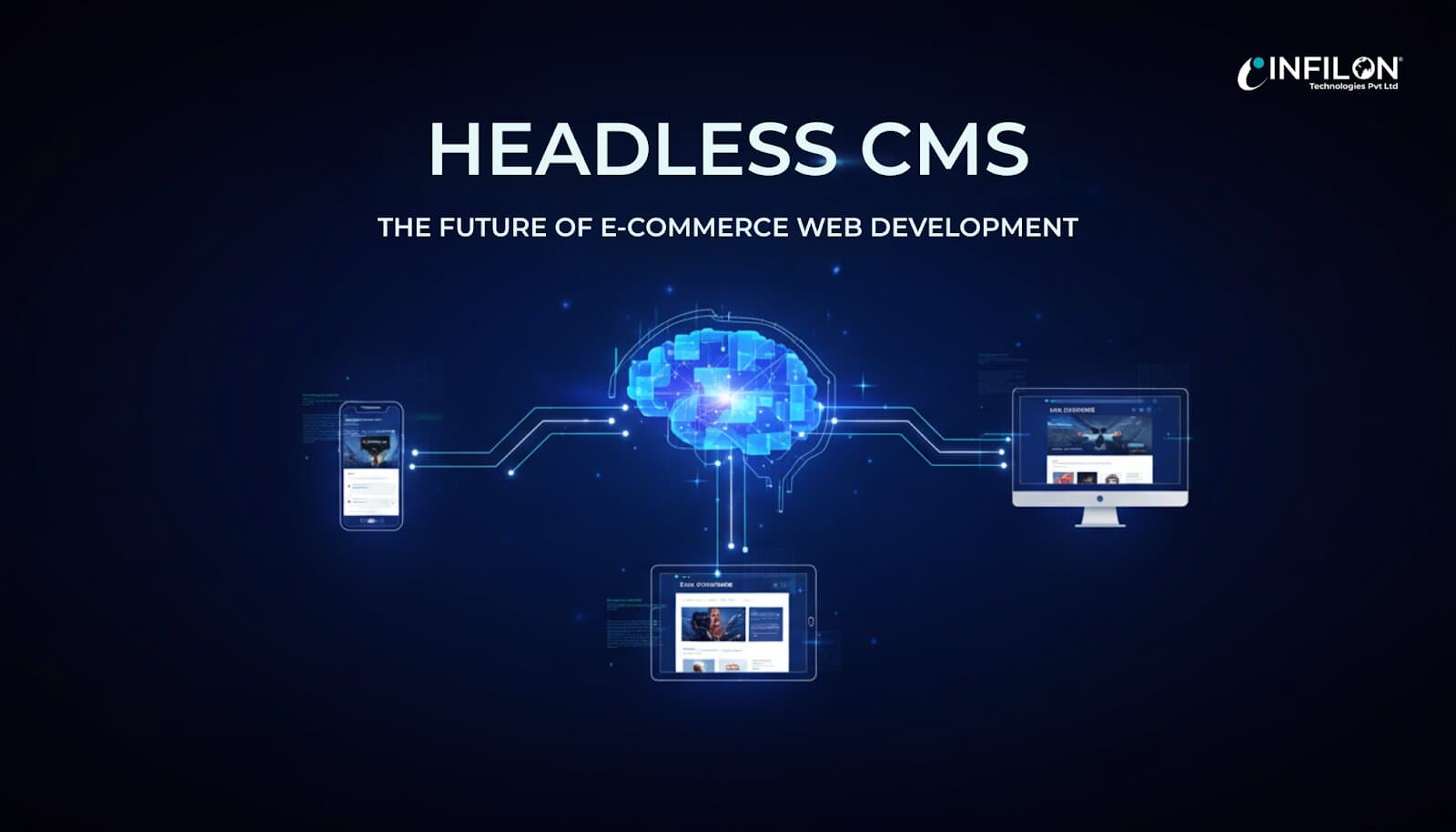
A Headless CMS is a content management system where the backend (content repository) is separated from the frontend (presentation layer). Instead of delivering content through predefined templates, it uses APIs to distribute content across multiple platforms.

Unlike traditional CMS platforms where the content and presentation are tightly integrated, a headless architecture allows developers to build custom frontends using frameworks like React, Angular, or Vue while pulling content dynamically from the backend.

This decoupled approach offers unparalleled flexibility in E-commerce Web Development, especially for brands targeting multiple digital channels.

Why Traditional CMS is Falling Behind

Traditional CMS platforms were designed primarily for website management. However, modern e-commerce requires:

  • Omnichannel content delivery
  • High-speed performance
  • Personalized shopping experiences
  • Seamless integrations with third-party tools
  • Scalability during peak traffic

Monolithic CMS architectures limit customization and scalability, making them less suitable for modern digital commerce strategies.

How Headless CMS Powers Modern E-commerce Web Development

1. Omnichannel Content Delivery

Today’s consumers interact with brands across websites, mobile apps, marketplaces, voice assistants, and social media platforms. A Headless CMS enables businesses to manage content centrally and distribute it via APIs to multiple channels.

This ensures consistent branding and messaging while reducing content management complexity.

2. Enhanced Performance and Speed

Page load speed directly impacts conversion rates in e-commerce. Headless architecture allows developers to use lightweight frontend frameworks, improving performance and delivering faster user experiences.

For businesses investing in scalable Ecommerce Web Development, performance optimization becomes significantly easier with a decoupled architecture.

3. Greater Flexibility and Customization

With traditional CMS platforms, developers are restricted by predefined themes and templates. Headless architecture provides complete freedom to design customized frontends tailored to brand identity and customer needs.

This flexibility allows businesses to innovate quickly and experiment with new features without disrupting backend operations.

4. Improved Scalability

As businesses grow, their digital infrastructure must scale efficiently. Headless CMS systems support microservices architecture, enabling seamless scalability during high-traffic events like holiday sales or product launches.

Enterprises often collaborate with a trusted software development company in USA to implement scalable headless commerce solutions aligned with global standards.

5. Better Integration with Modern Technologies

Headless CMS integrates smoothly with:

  • Payment gateways
  • CRM systems
  • ERP software
  • Marketing automation tools
  • AI-driven recommendation engines

This integration capability strengthens overall E-commerce Web Development strategies and ensures a unified digital ecosystem.

Headless Commerce vs Traditional Commerce

Feature Traditional CMS Headless CMS
Architecture Monolithic Decoupled
Flexibility Limited Highly customizable
Omnichannel Support Restricted API-driven
Scalability Moderate High
Performance Template-dependent Optimized frontend

The comparison clearly highlights why businesses are shifting toward headless commerce models.

Key Benefits of Headless CMS for E-commerce Businesses

1. Faster Time-to-Market

Developers can work independently on frontend and backend components, accelerating deployment cycles.

2. Personalized User Experiences

Headless architecture makes it easier to integrate AI and personalization tools, enhancing customer engagement.

3. Future-Proof Technology

As new platforms emerge, businesses can integrate them without restructuring the entire system.

4. Improved Developer Productivity

Development teams can use modern frameworks and technologies, increasing efficiency and innovation.

Industry Use Cases of Headless CMS

Retail & Fashion

Brands can deliver personalized product catalogs across mobile apps and web platforms.

B2B E-commerce

Complex pricing structures and product configurations become easier to manage.

Subscription-Based Services

Flexible content delivery enables dynamic subscription management and promotions.

Companies offering professional Ecommerce development services increasingly recommend headless architecture to clients seeking long-term scalability.

Challenges to Consider

While Headless CMS offers numerous advantages, businesses should consider:

  • Higher initial development complexity
  • Need for experienced development teams
  • API management and security considerations

Partnering with experts ensures smooth implementation and ongoing optimization.

The Role of E-commerce Development Services

Implementing headless architecture requires strategic planning and technical expertise. Professional Ecommerce development services help businesses:

  • Choose the right headless CMS platform
  • Design scalable system architecture
  • Integrate APIs and third-party tools
  • Optimize frontend performance
  • Maintain security and compliance

Working with experienced development partners ensures the successful deployment of headless commerce solutions.

The Future of E-commerce Web Development

As customer expectations continue to rise, businesses must embrace technologies that support agility, speed, and innovation. Headless architecture enables brands to deliver seamless experiences across every digital touchpoint.

In the coming years, we can expect:

  • Greater AI integration
  • Voice-commerce capabilities
  • Real-time personalization
  • Progressive Web Apps powered by headless CMS
  • Increased adoption of composable commerce

These advancements will further redefine the standards of modern E-commerce Web Development.

Conclusion

Headless CMS is not just a technological trend—it represents the future of scalable, high-performance digital commerce. By decoupling content from presentation, businesses gain the flexibility to innovate, personalize, and expand across multiple platforms.

For companies seeking competitive advantage in today’s digital marketplace, adopting a Headless CMS strategy ensures faster performance, omnichannel readiness, and long-term scalability.

With the right development expertise and strategic planning, headless architecture can transform your e-commerce ecosystem into a powerful, future-ready platform.

whatsAppImg