
lfArrowSvg
Blogs
blog-img
Is your website being ignored?
Category
Recent News
blog-image
2026-03-12 17:30dot separator7 min read
cross arrow

ERP Software Development: Odoo vs. NetSuite Comparison

Enterprise Resource Planning (ERP) systems are essential for modern businesses aiming to streamline operations, improve efficiency, and scale sustainably. From finance and inventory to HR and customer management, ERP platforms integrate core business functions into a unified system.However, choosing the right ERP platform is critical. Among the most popular solutions today, Odoo and NetSuite stand out as powerful options for businesses of all sizes. This blog provides a comprehensive comparison of Odoo vs. NetSuite to help organizations make informed decisions for effective ERP Software Development.Understanding ERP Software DevelopmentERP Software Development involves designing, customizing, and implementing enterprise solutions that centralize business processes. A well-developed ERP system enhances productivity, reduces operational silos, and provides real-time insights for better decision-making.Businesses often collaborate with an experienced ERP company in Ahmedabad to build tailored ERP solutions aligned with industry requirements and operational goals.Overview of Odoo ERPWhat is Odoo?Odoo is an open-source ERP platform known for its modular architecture and flexibility. It offers a suite of business applications covering CRM, accounting, inventory, HR, manufacturing, and e-commerce.Key Features of OdooOpen-source and highly customizableModular apps for different business functionsUser-friendly interfaceCost-effective for startups and SMEsStrong community supportOdoo is widely adopted by businesses seeking scalable ERP solutions without heavy licensing costs.Overview of NetSuite ERPWhat is NetSuite?NetSuite is a cloud-based ERP platform owned by Oracle, designed for mid-sized to large enterprises. It offers robust enterprise-grade tools for financial management, supply chain operations, CRM, and advanced analytics.Key Features of NetSuiteFully cloud-native architectureAdvanced financial management toolsEnterprise-level scalabilityBuilt-in business intelligence and analyticsGlobal compliance and multi-currency supportNetSuite is often preferred by large enterprises needing powerful, integrated, and highly secure ERP systems.Odoo vs. NetSuite: Feature Comparison1. Customization and FlexibilityOdoo excels in customization due to its open-source framework. Businesses can tailor modules extensively to match workflows and industry requirements.NetSuite, while customizable, offers limited flexibility compared to Odoo and often requires specialized developers for modifications.Organizations seeking adaptable ERP platforms often rely on an experienced ERP company in Ahmedabad to customize Odoo effectively.2. Cost and LicensingOdoo offers a cost advantage with its open-source version and modular pricing structure. This makes it ideal for startups and growing businesses.NetSuite operates on a subscription-based model with higher licensing costs, making it more suitable for enterprises with larger budgets.3. Deployment and HostingOdoo supports both on-premise and cloud deployment, offering flexibility in hosting.NetSuite is fully cloud-based, ensuring easier maintenance but limiting hosting control.4. ScalabilityNetSuite is built for enterprise scalability, supporting complex global operations and large data volumes.Odoo also scales effectively but may require additional customization and optimization for enterprise-level deployments.5. User ExperienceOdoo features a modern, intuitive interface suitable for businesses transitioning from legacy systems.NetSuite offers powerful dashboards and analytics tools but may have a steeper learning curve.Industry Use CasesSmall and Medium BusinessesOdoo is ideal for SMEs due to its affordability and modular flexibility.Large EnterprisesNetSuite is better suited for enterprises requiring advanced financial controls, compliance, and global operations support.Integration CapabilitiesBoth platforms integrate with third-party tools such as CRM systems, payment gateways, and marketing automation software.Odoo provides greater API flexibility, while NetSuite offers secure enterprise integrations with Oracle ecosystem tools.Businesses offering E-commerce development services often integrate ERP systems with online stores for seamless inventory and order management.Choosing the Right ERP Development PartnerSelecting the right ERP platform is only part of the journey. Successful implementation depends on expert development, customization, and long-term support.Infilon Technologies specializes in delivering intelligent ERP solutions tailored to business needs. As a trusted ERP company in Ahmedabad, Infilon helps organizations choose, customize, and implement the right ERP platform efficiently.With deep technical expertise and industry knowledge, Infilon Technologies ensures ERP systems are scalable, secure, and aligned with business growth strategies.Why Businesses Prefer Professional ERP Software DevelopmentProfessional ERP implementation offers:Customized workflowsSeamless data migrationSecure integrationsPerformance optimizationOngoing technical supportEnterprises also prefer partnering with a reliable software development company in USA to ensure compliance, global standards, and high-quality enterprise solutions.Final Verdict: Odoo vs. NetSuiteFeatureOdooNetSuiteCostBudget-friendlyPremium pricingCustomizationHighly flexibleModerate flexibilityDeploymentOn-premise & CloudCloud-onlyScalabilitySuitable for SMEs & growing enterprisesIdeal for large enterprisesEase of UseIntuitive UIAdvanced but complexBoth platforms are powerful ERP solutions. The best choice depends on your business size, budget, customization needs, and long-term goals.ConclusionChoosing between Odoo and NetSuite is a strategic decision that directly impacts operational efficiency and scalability. Businesses seeking affordability and flexibility often lean toward Odoo, while enterprises requiring robust, enterprise-grade capabilities prefer NetSuite.Effective ERP Software Development ensures that the chosen platform aligns perfectly with business workflows and future growth.By partnering with an experienced ERP provider, organizations can maximize ERP benefits and build a strong digital foundation for sustained success.

blog-image
2026-02-24 17:30dot separator7 min read
cross arrow

Headless CMS: The Future of E-commerce Web Development

The digital commerce landscape is evolving rapidly. Customers expect seamless shopping experiences across websites, mobile apps, social platforms, and even IoT devices. Traditional content management systems (CMS) often struggle to meet these growing demands due to rigid architectures and limited flexibility. This is where Headless CMS emerges as a game-changer. By decoupling the frontend from the backend, headless architecture is transforming E-commerce Web Development and setting new standards for scalability, performance, and omnichannel delivery. In this article, we’ll explore why Headless CMS is considered the future of modern e-commerce platforms and how businesses can leverage it for sustainable growth. What is a Headless CMS? A Headless CMS is a content management system where the backend (content repository) is separated from the frontend (presentation layer). Instead of delivering content through predefined templates, it uses APIs to distribute content across multiple platforms. Unlike traditional CMS platforms where the content and presentation are tightly integrated, a headless architecture allows developers to build custom frontends using frameworks like React, Angular, or Vue while pulling content dynamically from the backend. This decoupled approach offers unparalleled flexibility in E-commerce Web Development, especially for brands targeting multiple digital channels. Why Traditional CMS is Falling Behind Traditional CMS platforms were designed primarily for website management. However, modern e-commerce requires: Omnichannel content delivery High-speed performance Personalized shopping experiences Seamless integrations with third-party tools Scalability during peak traffic Monolithic CMS architectures limit customization and scalability, making them less suitable for modern digital commerce strategies. How Headless CMS Powers Modern E-commerce Web Development 1. Omnichannel Content Delivery Today’s consumers interact with brands across websites, mobile apps, marketplaces, voice assistants, and social media platforms. A Headless CMS enables businesses to manage content centrally and distribute it via APIs to multiple channels. This ensures consistent branding and messaging while reducing content management complexity. 2. Enhanced Performance and Speed Page load speed directly impacts conversion rates in e-commerce. Headless architecture allows developers to use lightweight frontend frameworks, improving performance and delivering faster user experiences. For businesses investing in scalable Ecommerce Web Development, performance optimization becomes significantly easier with a decoupled architecture. 3. Greater Flexibility and Customization With traditional CMS platforms, developers are restricted by predefined themes and templates. Headless architecture provides complete freedom to design customized frontends tailored to brand identity and customer needs. This flexibility allows businesses to innovate quickly and experiment with new features without disrupting backend operations. 4. Improved Scalability As businesses grow, their digital infrastructure must scale efficiently. Headless CMS systems support microservices architecture, enabling seamless scalability during high-traffic events like holiday sales or product launches. Enterprises often collaborate with a trusted software development company in USA to implement scalable headless commerce solutions aligned with global standards. 5. Better Integration with Modern Technologies Headless CMS integrates smoothly with: Payment gateways CRM systems ERP software Marketing automation tools AI-driven recommendation engines This integration capability strengthens overall E-commerce Web Development strategies and ensures a unified digital ecosystem. Headless Commerce vs Traditional Commerce Feature Traditional CMS Headless CMS Architecture Monolithic Decoupled Flexibility Limited Highly customizable Omnichannel Support Restricted API-driven Scalability Moderate High Performance Template-dependent Optimized frontend The comparison clearly highlights why businesses are shifting toward headless commerce models. Key Benefits of Headless CMS for E-commerce Businesses 1. Faster Time-to-Market Developers can work independently on frontend and backend components, accelerating deployment cycles. 2. Personalized User Experiences Headless architecture makes it easier to integrate AI and personalization tools, enhancing customer engagement. 3. Future-Proof Technology As new platforms emerge, businesses can integrate them without restructuring the entire system. 4. Improved Developer Productivity Development teams can use modern frameworks and technologies, increasing efficiency and innovation. Industry Use Cases of Headless CMS Retail & Fashion Brands can deliver personalized product catalogs across mobile apps and web platforms. B2B E-commerce Complex pricing structures and product configurations become easier to manage. Subscription-Based Services Flexible content delivery enables dynamic subscription management and promotions. Companies offering professional Ecommerce development services increasingly recommend headless architecture to clients seeking long-term scalability. Challenges to Consider While Headless CMS offers numerous advantages, businesses should consider: Higher initial development complexity Need for experienced development teams API management and security considerations Partnering with experts ensures smooth implementation and ongoing optimization. The Role of E-commerce Development Services Implementing headless architecture requires strategic planning and technical expertise. Professional Ecommerce development services help businesses: Choose the right headless CMS platform Design scalable system architecture Integrate APIs and third-party tools Optimize frontend performance Maintain security and compliance Working with experienced development partners ensures the successful deployment of headless commerce solutions. The Future of E-commerce Web Development As customer expectations continue to rise, businesses must embrace technologies that support agility, speed, and innovation. Headless architecture enables brands to deliver seamless experiences across every digital touchpoint. In the coming years, we can expect: Greater AI integration Voice-commerce capabilities Real-time personalization Progressive Web Apps powered by headless CMS Increased adoption of composable commerce These advancements will further redefine the standards of modern E-commerce Web Development. Conclusion Headless CMS is not just a technological trend—it represents the future of scalable, high-performance digital commerce. By decoupling content from presentation, businesses gain the flexibility to innovate, personalize, and expand across multiple platforms. For companies seeking competitive advantage in today’s digital marketplace, adopting a Headless CMS strategy ensures faster performance, omnichannel readiness, and long-term scalability. With the right development expertise and strategic planning, headless architecture can transform your e-commerce ecosystem into a powerful, future-ready platform.

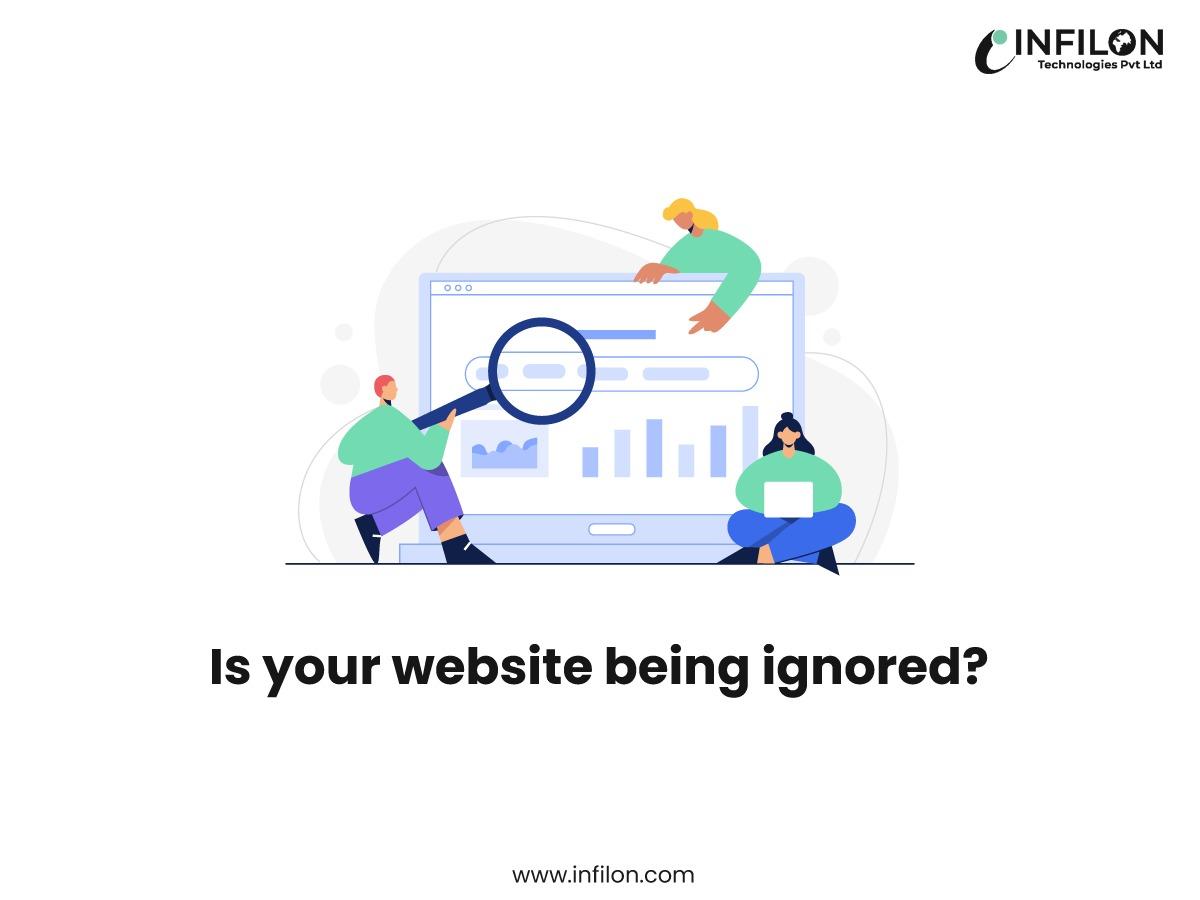
Is your website being ignored? These are 5 reasons why your website is not being seen.

Your website should be ranked high in all search engines. You want to attract as much organic traffic as possible. The lack of effective SEO services in India means that many business owners miss out on organic traffic. Infilon is an SEO Company in Ahmedabad that has helped many clients increase organic traffic to their websites. We are also known for being one of the top SEO agencies in India. How to help you analyze the possible reasons why people are ignoring your website.

Loading time

It is important to pay attention to website loading times. Websites that load quickly receive more traffic than those with slower loading times. A website’s loading time is the time it takes to load fully. The faster a site loads, the better the user experience. To get more visitors, website speed is crucial. The SEO rating of a website is also affected by its loading time. The SEO rating will drop if a website takes longer to load. This factor can cause your website rank to drop slowly, which will affect your website’s traffic. Your SEO company is crucial in helping you navigate this issue. Many Indian SEO companies fail to properly guide their customers.

Responsive web design

A responsive website is one that adapts to any screen size. Websites that do not use responsive design will show users the desktop version for all devices. Most users today prefer to use their mobile phones and tablets to surf the web. Users will have to zoom in and out several times to see the desktop version on their cell phones. Users lose interest in your site.

Too many popups

While pop-ups can be helpful in increasing conversion rates, they are not good for websites. Excessive pop-ups can cause irritation and hamper the user experience. It is important to make it easy for users to delete pop-ups from your website. Your existing users should not be confronted with pop-ups.

Too many ads

Advertisements can be a great way to generate revenue and bread & butter income. Too many advertisements are a bad idea. It deters visitors from enjoying a positive experience on your site. Users can also be annoyed by too many ads. It gives users the impression that your primary concern is revenue, rather than quality content. This can impact the rank of your website.

Security

While secure websites include HTTPS in the address, un-secure websites use HTTP. This is the easiest way to identify safe websites. It is not safe to make a payment on websites that use the HTTP protocol. These websites could steal confidential information. It is essential to have a secure and safe website, especially when money transactions are involved. This will build trust and make your users feel at ease while they browse your website.

When developing your website, ensure you take into consideration the following factors and only work with the best SEO company Ahmedabad. Infilon SEO Company is available to answer any questions regarding website development. For inquiries and consultations, call us at 8000230350.


whatsAppImg